May 24, 2024
Developments: Case Review - Verein Klimaseniorinnen Schweiz and Others and Switzerland (ECHR)
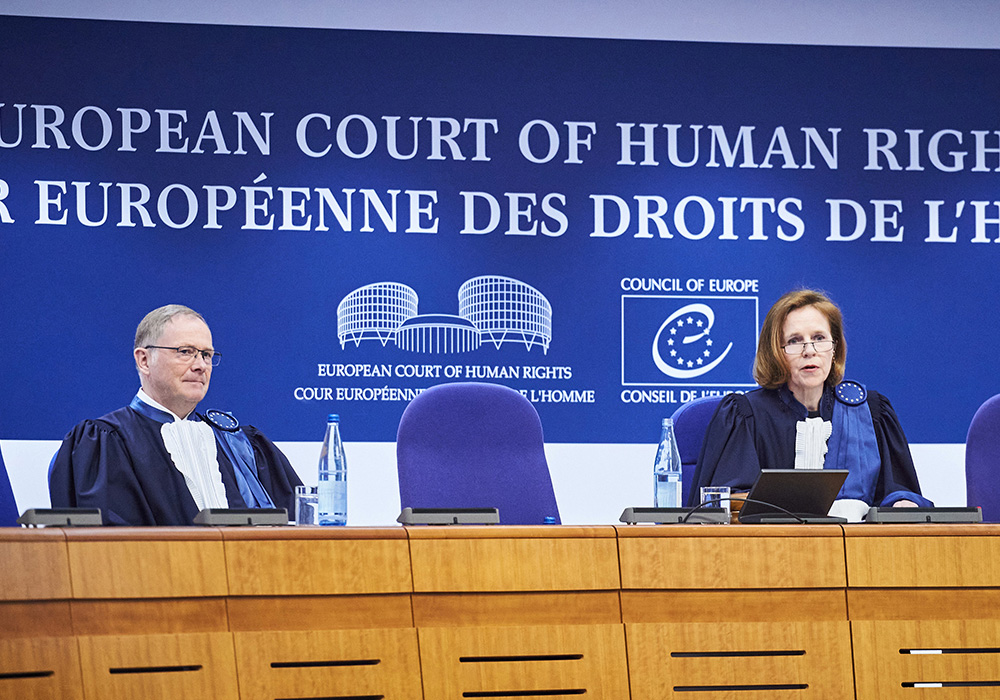
This case concerns an action brought against Switzerland by Verein Klimaseniorinnen Schweiz and Ruth Schaub, Marie-Eve Volkoff Peschon, Bruna Giovanna Olimpia Molinari and Marie Gabrielle Thérèse Budry (“KlimaSeniorinnen” or the “Applicants”), an association of senior Swiss women with more than 2,500 members concerned about the impact of global warming on their living conditions and health. Klimaseniorinnen argued that older women were particularly susceptible to intense and frequent heatwaves and thus the government responsibility towards them with respect to climate change preparedness and regulation
According to the Applicants, Switzerland failed to adopt appropriate legislation and adequate mitigating measures to combat dangerous climate change. A major part of the Applicants’ arguments before the European Court of Human Rights (“ECHR” or the “Court”) was based on the Switzerland’s commitments under the Paris Agreement. Klimaseniorinnen submitted that Switzerland pledged to cut its greenhouse gas emissions (GHG) by 20% by 2020, but their emissions had only dropped by roughly 11% since the 1990s. In this context, the Applicants argued that Switzerland had failed to effectively fulfil its obligations under Article 2 (right to life) and Article 8 (respect for private and family life) of the European Convention on the Protection of Human Rights and Fundamental Freedoms (the “Convention”).
Klimaseniorinnen first brought an action against the authorities in the Swiss domestic courts, where they were ultimately defeated in the Swiss Federal Court on the grounds that the alleged omissions by Switzerland did not appear to pose a sufficient threat to the Applicant’s' right to life. Further, the State’s omissions did not achieve ‘fundamental rights relevance’ required under the law to guarantee the protection of individual rights. Consequently, Klimaseniorinnen filed an application in the ECHR, where in the first instance, the Court found the Applicant’s case to be admissible. Based on specific considerations relating to climate change, the ECHR recognized the possibility for associations, subject to admissibility criteria, to have a standing before the ECHR as representatives of individuals whose rights are or may be affected.
The ECHR found several important shortcomings in the implementation of the country’s commitments, in relation to mitigating (dangerous) climate change. For example, Switzerland had failed to meet its previous GHG emission reduction targets, as recognized by the competent Swiss authorities. Moreover, Switzerland had failed to act in a timely, adequate and consistent manner with respect to the designing, development and implementation of the relevant legislative and administrative frameworks to prevent (dangerous) climate change.
The ECHR also held that Switzerland did not employ measures, such as a carbon budget, to assess how well it is reducing emissions. While acknowledging that national authorities have a broad discretion concerning the implementation of legislation and measures, the ECHR held that the Swiss authorities had not acted in time and in an appropriate way to implement relevant legislation and measures in the case before the court. In addition, the ECHR found that Article 6 (right to a fair trial) and Article 1(obligation to respect human rights) of the Convention applied to the Applicants’ complaint concerning effective implementation of the mitigation measures under existing domestic law.
In its judgment the Court considered that in line with the international commitments undertaken by the member States, most notably under the United Nations Framework Convention on Climate Change (UNFCCC) and the Paris Agreement, and the cogent scientific evidence provided, in particular, by the Intergovernmental Panel on Climate Change (IPCC), the Contracting States need to put in place the necessary regulations and measures aimed at preventing an increase in GHG concentrations in the Earth’s atmosphere and a rise in global average temperature beyond levels capable of producing serious and irreversible adverse effects on human rights, notably the right to private and family life and home under Article 8 of the Convention
The ECHR thus ruled that Switzerland violated the human rights of the members of KlimaSeniorinnen association as laid down in Article 8 of the Convention. Additionally, the ECHR found that Switzerland failed to comply with its positive obligations under the Convention concerning climate change, with critical gaps in establishing a relevant domestic regulatory framework, including a carbon budget or a national GHG emissions limitations.
Violation of the right to life and right to respect for private and family life – Articles 2 and 8 of the Convention
As previously indicated, the Applicants contended that the omissions violated their rights under the Convention, in particular the right to life, to health, and to physical integrity protected in Article 2 and Article 8 of the Convention. Specifically, they argued that the State has a duty to put in place the necessary administrative and regulatory framework, considering the particular circumstances and the level of risk.
The Applicants further argued that the serious threat to their health, well-being and quality of life posed by dangerous climate change sufficed to trigger positive obligations under Article 8, which would also have been the case even if their health had not deteriorated or had not been seriously endangered. In the Applicants’ view, Article 8 included their right to personal autonomy and their right to age with dignity.
Further submissions by the Applicants under Article 2 of the Convention were that the ECHR needed to determine whether, given the circumstances of the case, the State had done all that could have been required of it to prevent their lives from being put at risk. The scope of the Respondent State’s obligation to protect was derived from relevant rules and principles of international law, evolving norms of national and international law, and the consensus emerging from specialized international instruments and from the practice of Contracting States. Having regard to the harmonious interpretation of the Convention, taken together with these considerations, the Applicants argued that to comply with its obligation to protect them effectively, the State was required to do everything in its power to do its share to prevent a global temperature increase of more than 1.5◦C above pre-industrial levels. This necessarily included establishing a legislative and administrative framework to achieve that objective.
The ECHR affirmed that Article 8 of the Convention must be seen as encompassing a right for individuals to effective protection by State authorities from serious adverse effects of climate change on their life, health, well-being and quality of life. It ruled that the State’s primary duty is to adopt, and to effectively apply in practice, regulations and measures capable of mitigating the existing and potentially irreversible, future effects of climate change. At the same time, the ECHR underlined that States should be accorded a wide margin of appreciation regarding the choice of means adopted in order to meet internationally anchored targets and commitments in light of priorities and resources.
Generally, the Convention requires State parties to the Convention, to protect the rights and freedoms established in the Convention for their inhabitants. Article 2 of the Convention protects the right to life, and Article 8 of the Convention protects the right to respect private and family life. According to case law of the ECHR, a contracting State is obliged by these provisions to take suitable measures if a real and immediate risk to people’s lives or welfare exists, where the State is aware of that risk. The obligation to take suitable measures also applies when it comes to environmental hazards that threaten large groups or the population, even if the hazards will only materialize over the long term. While Articles 2 and 8 of the Convention are not permitted to result in an impossible or disproportionate burden being imposed on a State, the said provisions do oblige the State to take measures that are suitable to avert the imminent hazard as much as reasonably possible.
Further, the Court stipulated that when emphasising the positive obligations imposed on the State, pursuant to Articles 2 and 8 of the Convention, one must consider broadly supported scientific insights and internationally accepted standards. A country cannot escape its own share of the responsibility to take measures by arguing that compared to the rest of the world, its own emissions are relatively limited in scope and that a reduction of its own emissions would have very little impact on a global scale. Each individual State is called upon to define its own pathway for adequately reaching carbon neutrality, depending on the sources and levels of emissions and all other relevant factors within its jurisdiction. By ratifying the Paris Agreement, Switzerland made a definite commitment to halve its GHG emissions by 2030 from its emission levels of the 1990s and reduce them by on average 35% per year over the period from 2021 to 2030. The State is therefore obliged to reduce GHG emissions from its territory in proportion to its share of the responsibility.
Violation of the right to access to a fair trial (Article 6 of the Convention)
The Applicants contended that they had not had an effective judicial remedy at their disposal by which to assert their civil rights. When they urged the Swiss authorities to take immediate action in order to meet the goals set out in the Paris Agreement and comply with their international commitments, the Swiss Federal Department of the Environment, Transport, Energy and Communications (“DETEC”) ruled that the application of the association would not be considered, as the requested measures did not relate to specific acts but would require a general change in policy. The DETEC was also of the opinion that it could not be expected to regulate GHG emissions alone and that a reduction in GHG emissions would have to be regulated worldwide. As a result, the domestic authorities declared the Applicant’s claims inadmissible on the grounds that they lacked standing.
Even more, the domestic courts had not assessed the Applicants’ claim or, alternatively, had only done so arbitrarily. None of the courts had effectively analysed the merits of the critical questions, such as those relating to the Applicants’ vulnerability to extreme heatwaves, the harm from heat-related afflictions and the legislative and administrative framework necessary to protect the Applicants’ rights to life and their families and private life.
At the outset, the Court reiterates that the right of access to a court includes not only the right to institute proceedings but also the right to obtain a determination of the dispute by a court. This flows from the fact that the right of access to a court must be “practical and effective,” not theoretical or illusory.
Moreover, the ECHR established that Switzerland indeed breached Article 6 of the Convention since the domestic courts had not provided convincing reasons why they considered it unnecessary to examine the merits of the Applicants’ complaints. The courts had failed to examine the scientific evidence concerning climate change and did not engage seriously or at all with the action brought by the Applicants. In its failure to examine or provide convincing reasons for dismissal, the ECHR considered that the Swiss courts had fettered the Applicants’ right to access a court and Article 6 was violated. Thus, the essence of the right to access to court was impaired.
Potential impact of the ECHR judgement on climate change litigation
Firstly, the ECHR ruled that individuals are entitled to receive effective protection from States against the serious adverse effects of climate change. Article 8 of the Convention requires States to adopt and effectively apply regulations and measures that mitigate the existing and potentially irreversible future effects of climate change.
In order to prevent future increases in GHG emissions and global temperatures that could have irreversible negative effects on human rights, the ECHR explicitly considered that the States needed to enact regulations and measures in line with international commitments, such as the Paris Agreement, and supported by scientific evidence and advice from bodies like the IPCC. The ECHR effectively underscored that effective respect for the rights protected by Article 8 of the Convention requires that each Contracting State undertake measures for the substantial and progressive reduction of their respective GHG emission levels, with a view to reaching net neutrality within, in principle, the next three decades. In this regard, States must set relevant targets and timelines, which must form an integral part of the national legal framework, as a basis for mitigation measures.
Secondly, the ECHR did not accept the often-used defence by States that their GHG emissions are only a minor cause of climate change (the drop-in-the-ocean argument) and that therefore, in the absence of a direct causal link, States cannot be held responsible. The ECHR further held that, in the specific context of climate change, a causal link between the (potential) adverse human rights impacts of climate change and the alleged failure of States to fulfil their positive obligations under the Convention to mitigate such climate change is sufficient to establish causality. Therefore, a direct causal link is not required to establish a potential violation of human rights in the context of climate change attributable to a State under the Convention.
It is widely anticipated that the court's decision in KlimaSeniorinnen case is the first recognition of the possibility that climate change could violate rights under the Convention, indicating that the Court will consider and take appropriate action based on the strong evidence of the effects of global warming that is shown to it. Future applicants are expected to continue pushing the limits of Convention jurisprudence and utilizing emerging facts to show breaches of other rights, as there are now a number of climate change-related cases pending before the courtThe ECHR judgments are often persuasive before other international courts and tribunals, hence this finding will significantly contribute to the development of international jurisprudence around climate change.
The judgement further illustrates that the Applicants submitted in court that Switzerland’s action to tackle climate change was inadequate for the following reasons:
a) Switzerland had failed to legislate for the minimum possible requisite emissions reduction targets for 2020 and had then failed to meet that inadequate emissions reduction target.
b) The 2030 proposed target was manifestly inadequate and had not even been given legislative effect and
c) Switzerland’s 2050 proposed target was inadequate as far as it did not commit Switzerland to net-zero domestic emissions and this too had not yet even been given legislative effect.
Against the above background, the Applicants asserted that the State had failed and continued to fail to protect them effectively, in violation of their right to life under Article 2 of the Convention. The scope of the respondent State’s obligation to protect under Articles 2 and 8 needed to be interpreted in the light of the relevant international instruments, which manifested international obligations on the measures that needed to be taken to address the serious and profound risks of climate change. This related, in particular, to the commitments undertaken by the State under the UNFCCC and the Paris Agreement, as well as the 2021 Glasgow Climate Pact which had confirmed 1.5◦C as the primary global temperature rise ceiling.